Articles & Perspectives
Video: 3 Key Takeaways from the 2026 Restaurant Leadership Conference
1 minute read

4 minute read
The future of food and beverage manufacturing is bright. Data analytics, automation, and AI are unlocking new value in operations, boosting efficiency, reducing costs, and improving product quality and customer satisfaction.
But there’s a problem: Many companies aren’t getting the right results from AI investments. In PwC’s 2025 Digital Trends in Operations Survey, 92% of operations and supply chain leaders said tech investments haven’t delivered the expected results. Why? Too many businesses have the wrong mindset around AI.
Take, for example, a large food manufacturer that implemented Blue Yonder for its AI-powered Advanced Planning and Scheduling (APS) tool. During the implementation, the company realized they were lacking the right internal knowledge to tune algorithms and manage reconciliation to address seasonal fluctuations. This meant the business couldn’t use the new tool, jeopardizing their investment and ROI. In this case, the technology didn’t fail; the setup and strategy did.
This exemplifies a cautionary message: When implementing AI-based technology, instead of viewing these tools as shiny toys and quick fixes, companies need to treat AI as a new team member that needs onboarding, training, and long-term collaboration to thrive.
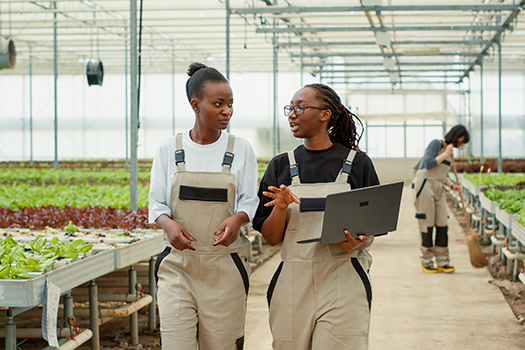
At its core, AI functions by making suggestions based on the data that’s been fed into it. This means that poor data yields poor suggestions.
This manifests in the food and beverage industry in a few ways. First, companies handle massive amounts of data daily. But most organizations’ data quality is abysmal at best. In fact, a Harvard Business Review study found that only 3% of company data is accurate. AI operating on bad data can cause inaccurate projections, eroded consumer trust, and compliance and legal issues.
For example, one CPG brand used AI to optimize inventory management, but the company had outdated sales data. This led to overstocking a particular product, which ended up being a costly mistake.
Additionally, make sure to fact-check AI’s outputs, especially in the beginning stages. Research shows only 20% of generative AI results are fact-checked before use, which is risky for any brand.
These issues won’t get better without help from your team. Humans need to guide AI, making judgement calls, creating feedback loops, and telling the system what decision was made, why, and what the outcome was. Without that interaction, AI will never learn how the business operates.
AI success is a long-term initiative. It can take years of collaboration between people and models to build systems that generate real value. However, too many leaders expect immediate results.
This is especially true in food and beverage, where variables like geography, weather, and size impact manufacturing, distribution, and more. AI must learn the ins and outs of each business, which is a gradual process.
Additionally, implementing AI can require upskilling employees or hiring new ones with the right skills, which also takes time. Prompt engineering, AI principles, and generative AI top the list of AI-related skills that are the highest in demand, but these aren’t skills your organization is going to acquire overnight.
Ultimately, enterprise-wide AI adoption requires patience and planning. Anticipate multiple iterations, and remember that you’re not just buying a tool, you’re building a key relationship that will deeply impact your business.
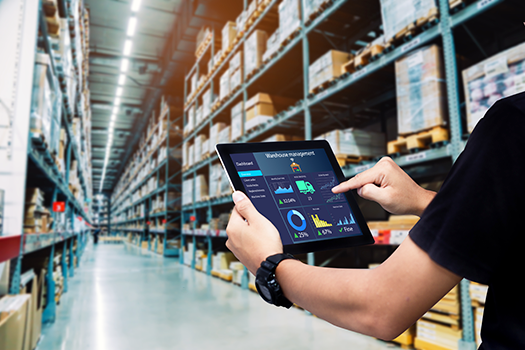
AI’s potential is dependent on your people. In Boston Consulting Group’s comprehensive AI report, they emphasized that to get AI initiatives right, 70% of the focus should be on people and processes, leaving 20% on the technology and 10% on algorithms.
Where most organizations go wrong is focusing on the tool and not enough on their team. They expect employees to use it immediately, which often backfires. When this happens, employees fall back on familiar tools like Excel or fail to buy into the new technology altogether.
To avoid this, develop a human-centric implementation plan. Set short-, mid-, and long-term goals. Provide training and change management support, redesign roles as needed, and offer continuous education so your workforce can grow alongside your AI.
This doesn’t mean every employee needs to become an AI expert. But planners, production managers, and quality assurance teams, for example, need training to understand how AI fits into their day-to-day tasks. Line workers could also need to be taught to detect quality issues that AI misses, while planners should understand how to read AI-generated forecasts.
AI and automation can transform food and beverage operations, turning supply chains proactive, optimizing manufacturing processes, and enabling smarter product design. Kraft Heinz and General Mills prove that when handled right, these efforts can save millions.
But to realize that value, you can’t treat AI like another tool. The AI wave is the first time humans have had to learn to work with technology, not just use it. To succeed, integrate AI into your culture, train it like a teammate, and prioritize your people throughout the journey. Give it the right information, create an environment where it can grow, and remember, you’ll only get out what you put in.
The payoff is not just AI that mirrors operations but anticipates challenges. Having an automated system that alerts you to raw material shortages before they disrupt production, or reformulates products based on real-time feedback isn’t out of the realm of possibility. When your tech and teams evolve together, the future is closer than you think.