Articles & Perspectives
What Is Asset Reliability Consulting for Food Plants?
5 minute read

3 minute read
If you’ve ever approved a promotional budget and later struggled to explain where the money went, you’re not alone. CPG companies invest roughly 20% of annual revenue in trade promotions, yet nearly 60% fail to show a return on that investment.
Trade investment governance gives companies a structured way to plan, approve, track, and evaluate promotional spend. In the complex food and beverage industry, that structure turns trade spend from a reactive expense into a well-planned investment.
Trade investment governance is the framework that defines decision rights, data requirements, and review processes for promotions.
An example of this in action: When a regional retailer requests a temporary price reduction, governance determines what baseline sales and lift assumptions get documented before the promotion runs, and which metrics will determine afterward whether it worked.
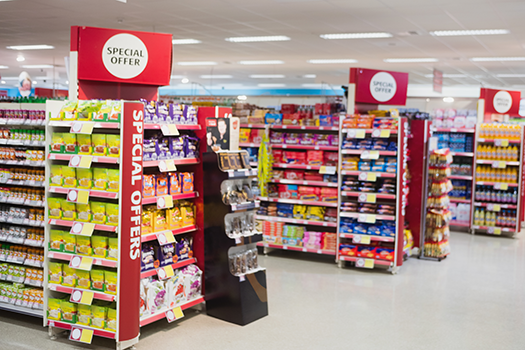
Trade promotion optimization (TPO) uses analytics to model lift, forecast ROI, and recommend which promotions to run. Governance is what makes the inputs to TPO consistent and trustworthy, which is what makes the output something teams can act on.
40% of CPG manufacturers say data quality issues prevent effective trade promotion optimization.
Clear decision rights and approval hierarchies. Who can approve a promotion, and what spending thresholds require escalation? Defining this up front keeps promotional investment aligned with strategic priorities.
Standardized planning processes. A governance framework sets when and how promotional plans get built, including annual planning cycles, monthly review meetings, and the templates teams use to propose new activity.
Consistent data capture and integration. Governance requires a single source of truth for trade data, integrating information from your ERP, trade promotion management system, and point-of-sale data into one unified view.
Performance measurement and review. Defined KPIs and a regular review cadence let teams evaluate what worked, what didn’t, and why.
Spreadsheet-driven planning: When promotional plans live in disconnected spreadsheets, version control breaks down. Changes don’t carry through, and reconciling actuals against plan becomes a manual, after-the-fact exercise.
Fragmented accountability: Without clear decision rights, sales, marketing, and finance end up optimizing for different metrics instead of total promotional ROI.
Reactive deduction management: Many organizations only discover promotional costs when retailers deduct them from invoices. By then, there’s not much room to influence the outcome or challenge an invalid claim.
Missing post-event analysis: Skipping the review step causes teams to repeat underperforming tactics instead of improving the next promotion.
48% of food and beverage suppliers still rely on manual spreadsheets to manage daily tasks, processes, and communications.

Building trade investment governance requires putting the right decision model, data foundation, and routines in place.
#1: Start with a governance assessment. Evaluate your current approach to governance, then prioritize the gaps with the biggest business impact.
#2: Set the decision structure: Define who owns decisions, when issues escalate, and how teams review performance across commercial, finance, and supply chain.
#3: Invest in your data foundation: Governance requires one reliable place for trade data, bringing information from your ERP, trade promotion management system, and point-of-sale data into one view.
#4: Build skills and change adoption: Governance only works when teams adopt it, so training and change management matter as much as process design itself.
Strong trade investment governance leads to clearer, faster, and more profitable promotional decisions.
Catena Solutions helps food and beverage clients improve forecast accuracy and reduce costs by strengthening governance and data practices. Contact us to learn more.