Articles & Perspectives
What Are the Warning Signs of a Breaking Food Safety Program?
5 minute read

5 minute read
Asset reliability programs fail in food manufacturing because preventive maintenance schedules rarely reflect real operating conditions. Daily sanitation, disconnected maintenance data, production pressures, and poor frontline adoption all contribute to equipment failures and unreliable maintenance performance.
This article explains the most common reasons asset reliability programs stall in food plants, how to identify the warning signs, and what manufacturers can do to improve reliability and reduce unplanned downtime.
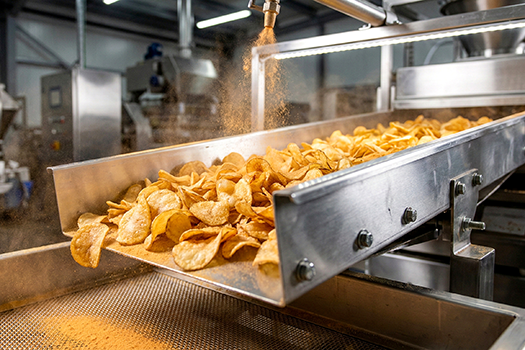
An asset reliability program is a structured approach to keeping manufacturing equipment operating safely, efficiently, and consistently. It combines preventive maintenance, predictive maintenance, equipment monitoring, maintenance planning, and reliability engineering to reduce failures and extend asset life. In food manufacturing, reliability programs must also account for sanitation requirements, regulatory compliance, and demanding production schedules.
Food manufacturing equipment operates in wet, corrosive environments and undergoes frequent washdowns with aggressive cleaning chemicals. These conditions accelerate wear on bearings, seals, motors, and electrical components. Downtime is also especially costly because spoiled product, missed shipments, and food safety risks can quickly compound financial losses.
The cost of downtime in food and beverage manufacturing can exceed $22,000 per minute, or over $1 million per hour.
OEM maintenance intervals are typically developed for clean, dry operating conditions rather than food plants. As a result, calendar-based schedules often miss sanitation-related wear.
Daily washdowns can introduce moisture and chemicals into equipment, while over-lubrication may damage seals and allow contaminants to enter critical components. Condition-based monitoring using vibration analysis, oil analysis, and thermography provides a more accurate picture of equipment health.
Related case study: Bringing Consistency and Ownership to a Sanitation Program
Maintenance decisions are only as good as the data behind them. When CMMS, SCADA, MES, and historian systems operate independently, maintenance teams lack the complete picture needed to identify trends, measure MTBF, and predict failures.
Even when a CMMS is in place, many organizations struggle with poor maintenance, repair, and operations (MRO) inventory management. Without dedicated stockrooms, standardized inventory practices, and accurate parts data, maintenance teams often discover that critical spare parts are unavailable or inventory records don’t match what’s actually on hand. These issues can delay preventive maintenance, extend equipment downtime, and force reactive repairs.
Incomplete asset master data creates another challenge. When equipment records lack accurate bills of materials, spare parts lists, or maintenance history, technicians spend valuable time identifying the correct parts instead of completing the work. Building a reliable maintenance program requires not only connected systems, but also accurate asset and inventory data that maintenance teams can trust.
A reliability program succeeds only when technicians trust and use it. If maintenance activities become compliance exercises rather than reliability improvements, paperwork increases while equipment performance declines. Training should emphasize practical improvements and measurable operational value.
“The industry is undergoing a cultural shift. It’s moving away from standard maintenance and towards technicians who can anticipate problems early and are willing to change how they work.” – Geoff Olsen, Supply Chain Transformation Practice Leader at Catena Solutions

When maintenance windows disappear to meet production targets, preventive work is deferred until equipment fails. The result is more emergency repairs, higher maintenance costs, and less predictable production schedules.
Evaluate your program through four lenses:
#1: Operational: Are PM intervals based on actual operating conditions?
#2: Data: Are maintenance and operational systems connected?
#3: Adoption: Do technicians trust the program?
#4: Metrics: Are down time, repeat failures, and maintenance backlog improving, or are PM completion rates masking deeper issues?
Prioritize assets by criticality, transition toward condition-based monitoring, connect maintenance and production data, establish cross-functional ownership, and provide practical training that reinforces new behaviors.
Related article: How to Unlock Change in a Manufacturing Environment

Effective reliability programs depend on accurate asset data, maintenance strategies aligned with operating conditions, and strong frontline adoption. Catena Solutions helps food and beverage manufacturers strengthen these foundations through operational assessments, data improvement, maintenance optimization, and change management.
Asset reliability programs fail when they are built around assumptions instead of real operating conditions. Organizations that align maintenance strategies with sanitation realities, integrate operational data, and build cross-functional ownership are better positioned to reduce downtime, improve equipment performance, and sustain long-term reliability.
Contact Catena Solutions to discuss how our team can support your reliability improvement efforts with hands-on expertise tailored to food and beverage operations.
It’s the conflict where the aggressive cleaning required for food safety, which includes high-pressure water and caustic chemicals, is also the leading cause of mechanical failure, accelerating seal degradation, bearing wear, and corrosion faster than standard PM schedules account for.
This is known as “infant mortality” in reliability engineering. In food plants, it’s usually caused by human error during reassembly: improper belt tensioning, seal damage, or moisture introduced into a dry system during inspection. Condition-based monitoring reduces how often these intrusive, high-risk interventions happen in the first place.
Preventive maintenance follows fixed calendar intervals regardless of equipment condition. Predictive maintenance uses real-time monitoring (vibration analysis, oil analysis, thermography) to catch degradation when it starts, reducing both unnecessary interventions and surprise failures.
Common warning signs are unplanned downtime rising even as PM completion rates stay high, growing work order backlogs, technicians describing the program as “paperwork” rather than real maintenance, and data too disconnected to support trend analysis.
Because CMMS, SCADA, MES, and historian systems typically don’t communicate with each other. Each one captures a different slice of equipment health, and without integration, no single system shows the full picture needed to make a reliable maintenance decision.
| Acronym | Stands For | What It Does |
|---|---|---|
| CMMS | Computerized Maintenance Management System | Software used to schedule preventive maintenance, manage work orders, track maintenance history, and monitor asset performance. |
| SCADA | Supervisory Control and Data Acquisition | A system that monitors and controls industrial equipment in real time, collecting operational data from machines and production lines. |
| MES | Manufacturing Execution System | Software that manages and tracks production activities on the plant floor, including work orders, quality, traceability, and production performance. |
| OEM | Original Equipment Manufacturer | The company that designs and manufactures equipment and provides recommended maintenance intervals and operating guidelines. |
| PM | Preventive Maintenance | Scheduled maintenance performed at predetermined intervals to reduce the likelihood of equipment failure. |