Articles & Perspectives
What Are the Warning Signs of a Breaking Food Safety Program?
5 minute read

4 minute read
When sanitation labor costs climb, staffing is the obvious place to look. But how long a cleaning job takes is shaped by the design of the equipment and facility long before the crew shows up. Guards that are hard to remove, crevices a brush can’t reach, and surfaces where water pools add minutes to every teardown, cleaning, inspection, and startup. Those minutes repeat every shift, on every line, and they add up to significant labor cost, longer downtime, and greater food safety risk.
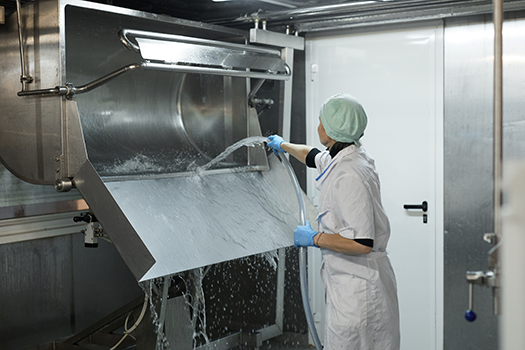
Sanitary, or hygienic, design is the practice of designing food processing equipment and facilities so they can be cleaned, sanitized, inspected, and maintained effectively and efficiently. In practice, that means minimizing hard-to-clean areas, giving access to food-contact surfaces, avoiding spots where water or product can accumulate, and simplifying disassembly and reassembly. Poor design does the opposite, and sanitation crews pay for it in time.
Poor sanitation design adds unnecessary work to routine cleaning procedures. Because sanitation happens every shift, even small inefficiencies compound across production lines and facilities.
The extra time shows up at every stage of the sanitation cycle:
Saving two hours of cleaning time per day at $20 per hour, five days a week, adds up to more than $10,000 a year. Multiply that across several lines or facilities, and sanitary design becomes a major operational cost.
Related Case Study: Building an Enterprise In-House Sanitation Program Framework
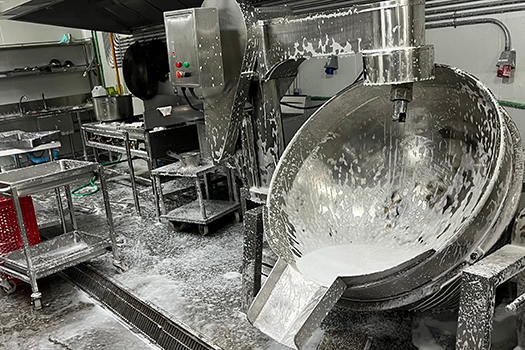
Sanitation labor is only part of the bill. Longer cleaning windows cut into production time, increase water and chemical use, complicate maintenance, and delay startup.
That’s why judging equipment on purchase price alone can be misleading. The initial price may represent only 10% to 15% of its total lifecycle cost, while ongoing operation, maintenance, and sanitation can account for the remaining 85% to 90%.
Poor design can also increase food safety risk. Scratches, cracks, grooves, pits, and other hard-to-clean areas can shelter microorganisms from cleaning actions and disinfectants, allowing contamination to persist despite routine sanitation.
Even after cleaning and disinfection, researchers found evidence of biofilm on 17% of surfaces sampled across food manufacturing facilities.
One of the most useful checks is comparison: if similar production lines take significantly different amounts of time to clean, the slower line deserves a design review. Other warning signs include recurring buildup in the same spots, excessive teardown, standing water, hard-to-access food-contact surfaces, frequent pre-operational inspection failures, and lengthy cleaning windows.
Ask the people who clean the equipment every day. They know where crews lose time, which components are hardest to reach, and which areas need repeat cleaning.
“When equipment is difficult to clean, you’re not just adding time to sanitation. You’re adding labor, extending downtime, and creating more opportunities for inconsistency. Good sanitary design removes those barriers so teams can clean effectively without unnecessary work.” – Geoff Olsen, Supply Chain & Operations Practice Director at Catena Solutions
Related Case Study: Bringing Consistency and Ownership to a Sanitation Program
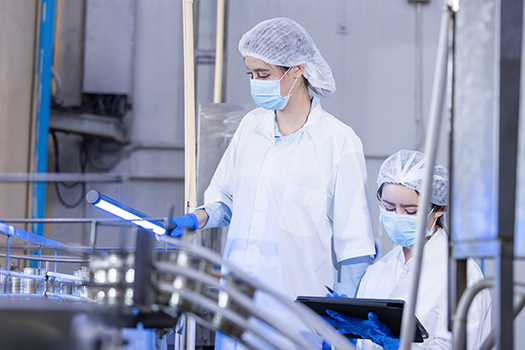
Start by finding out where the time actually goes. Observe cleaning procedures, review equipment for hygienic design issues, and time each stage: teardown, cleaning, inspection, reassembly, and startup. The stages that run longest, or vary most between similar lines, are the best places to look first.
From there, improvements range from modifying existing equipment to writing sanitary design requirements into future capital purchases. Options include eliminating harborage points, improving drainage and accessibility, standardizing sanitation procedures, and redesigning workflows.
The goal isn’t to make crews clean faster at the expense of food safety. It’s to remove unnecessary work so teams can reach the required level of cleanliness more efficiently and consistently.
It makes equipment harder and slower to disassemble, clean, inspect, and reassemble. Those extra minutes repeat every shift and across every line, extending sanitation windows and increasing labor hours.
Common signs include hard-to-reach surfaces, standing water, recurring buildup, difficult teardown, repeated pre-operational inspection failures, and cleaning that requires excessive manual labor.
Yes. Equipment built for accessibility, drainage, and easier disassembly removes unnecessary sanitation tasks while helping teams meet food safety requirements.
Assess existing equipment and sanitation workflows, identify recurring cleaning problems, make targeted modifications, and build hygienic design standards into future equipment and facility purchases.