Articles & Perspectives
What Are the Biggest Food Safety Standardization Challenges for Food Manufacturers?
7 minute read

5 minute read
Asset reliability consulting helps food and beverage manufacturers improve equipment performance, reduce unplanned downtime, and maintain food safety and regulatory compliance. Reliability consultants assess how and why equipment fails and develop maintenance strategies to improve reliability, protect product quality, and keep production running consistently.
Ultimately, asset reliability is about making sure production equipment doesn’t become the reason a food plant misses a shipment, fails an audit, experiences a food safety issue, or faces an avoidable production disruption.

Food and beverage plants face unique operational and food safety requirements that make a specialized approach to asset reliability essential:
An asset reliability consultant with food industry experience can account for these constraints when developing maintenance and reliability strategies rather than applying a generic manufacturing approach.
Related: Why Do Asset Reliability Programs Fail in Food Plants?
For food and beverage manufacturers, the financial impact of equipment reliability can add up quickly. Unplanned downtime costs F&B manufacturers an average of approximately $30,000 per hour.
Asset reliability consultants assess equipment, maintenance processes, data, and organizational practices to identify reliability gaps and develop strategies for improving asset performance. Common areas of support include:
Consultants evaluate current maintenance practices, equipment failure history, asset performance, and criticality across a plant. This typically results in a gap analysis comparing current practices against reliability best practices and identifying opportunities for improvement.
Not every asset requires the same level of attention. Consultants rank equipment based on the potential impact of failure on safety, food safety, production, quality, and cost so maintenance resources can be prioritized where they matter most.
When equipment fails repeatedly, consultants use structured approaches such as Failure Mode and Effects Analysis (FMEA) and Root Cause Analysis (RCA) to determine why failures occur. This helps plants address underlying issues, such as design limitations, lubrication gaps, or operating practices, rather than repeatedly treating symptoms.
Consultants can build or refine preventive maintenance (PM) programs and identify opportunities to introduce condition-monitoring technologies such as vibration analysis, thermal imaging, ultrasound, and oil analysis. The goal is to help plants move from reactive maintenance toward more preventive and predictive approaches.
Many food plants already use a Computerized Maintenance Management System (CMMS) but may not be using its full capabilities. Consultants can help improve asset hierarchies, standardize work orders, strengthen maintenance data, and make the CMMS a more effective tool for reliability decision-making.
Asset reliability consultants help plants identify and stock critical spare parts while reducing unnecessary Maintenance, Repair & Operations (MRO) inventory. The goal is to balance equipment availability with inventory costs.
Reliability improvements are difficult to sustain without support from maintenance technicians, operators, and plant leadership. Consultants can train teams on reliability-centered maintenance (RCM) principles and help establish greater ownership of preventive maintenance and equipment reliability.
Asset reliability consulting can help food and beverage manufacturers with efficiency, food safety, and long-term asset performance.
Outcomes include:
Results vary based on a plant’s existing reliability maturity, equipment condition, maintenance practices, and operational environment. Facilities operating primarily in reactive maintenance mode may have different improvement opportunities than plants with mature reliability programs already in place.
Unplanned downtime remains a widespread manufacturing challenge, with 69% of industrial businesses reporting unplanned outages at least once a month.
Maintenance consulting typically focuses on specific maintenance processes or challenges, while asset reliability consulting takes a broader view of how people, processes, data, maintenance strategies, and equipment work together to improve long-term performance.
For food and beverage manufacturers, asset reliability consulting can also incorporate considerations such as sanitary design, food safety, sanitation, allergen controls, and production requirements. This helps manufacturers address equipment reliability within the broader context of safe and consistent food production.
Related: Sanitation System Overhaul for a New Production Plant
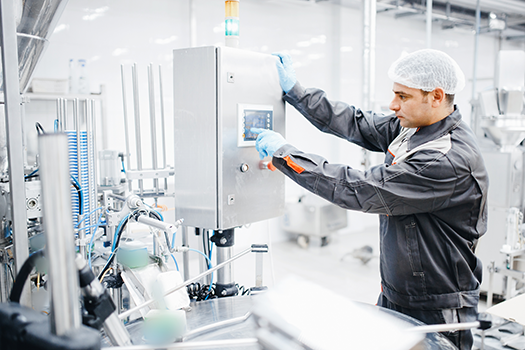
A food plant may consider outside asset reliability expertise when recurring equipment failures, inconsistent maintenance practices, poor asset data, or limited internal resources are affecting production performance.
Organizations that commonly seek asset reliability support include:
“Asset reliability isn’t just about keeping equipment running. When manufacturers connect maintenance with production, food safety, sanitation, and equipment data, they can identify risks earlier, reduce unplanned downtime, and build safer, more consistent operations.” – Geoff Olsen, Supply Chain Practice Director at Catena Solutions
The goal of an asset reliability program is to improve the availability, performance, and lifespan of critical equipment while reducing unplanned failures and operational risk.
For food and beverage manufacturers, an effective reliability program connects maintenance practices with production, food safety, sanitation, quality, and capital planning. Instead of responding to failures after they happen, plants can use equipment data, preventive maintenance, condition monitoring, and structured reliability practices to identify and address risks earlier.
Asset reliability consulting for food plants combines reliability engineering and maintenance strategy with an understanding of the operational, sanitation, and food safety requirements of food and beverage manufacturing.
By strengthening maintenance practices, equipment data, asset strategies, and organizational capabilities, manufacturers can reduce unplanned downtime, improve asset performance, manage equipment-related risks, and build a more consistent approach to plant reliability.
Asset reliability is the ability of equipment and other physical assets to consistently perform their intended functions under expected operating conditions. Reliability programs use maintenance strategies, equipment data, failure analysis, and continuous improvement practices to reduce unexpected failures.
Reliability-centered maintenance (RCM) is a structured approach for determining the most appropriate maintenance strategy for an asset based on its functions, potential failure modes, and the consequences of failure.
Preventive maintenance is performed at predetermined intervals to reduce the likelihood of equipment failure. Predictive maintenance uses equipment condition and performance data to identify signs of deterioration and determine when maintenance may be needed.
Equipment condition can affect food safety when failures introduce foreign material, create sanitation challenges, compromise temperature controls, or otherwise increase contamination risk. Integrating reliability and food safety considerations can help plants identify and address these risks before they affect product.