Articles & Perspectives
How Poor Sanitation Design Raises Labor Costs
4 minute read

6 minute read
The sanitation program gaps that most often raise recall risk are weak verification (cleaning that is done but never proven effective), poor environmental monitoring, inadequate allergen and changeover controls, hard-to-clean equipment and zones, and undertrained or overstretched sanitation crews. Each one lets pathogens, allergens, or foreign material reach finished product undetected.
Sanitation program gaps are weaknesses in the procedures, verification, training, or facility design that keep a plant from reliably removing contamination hazards. Also called hygiene program deficiencies, they rarely cause a recall on their own. They accumulate over time until a pathogen, allergen, or physical hazard escapes into product.
“For food and beverage leaders, the key point is that these gaps are leading indicators. By the time a positive finished-product test or a customer complaint appears, the underlying sanitation failure has usually existed for weeks or months.” – Geoff Olsen, Supply Chain & Operations Practice Director at Catena Solutions
Sanitation is a primary control for food contamination prevention. When it fails, three things happen:
Any of these can trigger a regulatory action or voluntary recall. Product recall risk is therefore tied directly to how well sanitation is designed, executed, and verified.
In 2025, U.S. food and beverage recalls hit a nine-year high, with 571 recalls recorded.
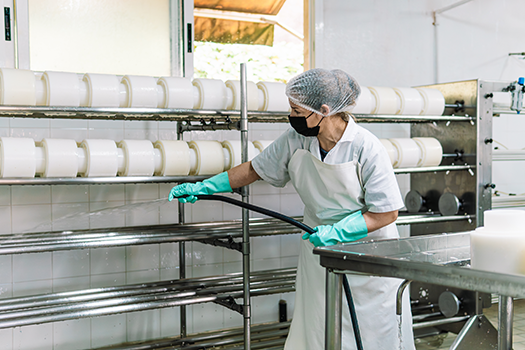
The following warning signs show up repeatedly in plants that later face contamination events.
The most common gap is treating a completed checklist as proof of a clean line. Without verification, a plant cannot show that sanitation worked.
Operational example: A crew signs off on a pre-operational clean every shift, but no one runs ATP swabs, visual inspections by a second person, or microbial testing. A film of residue builds up in a hard-to-reach section of a conveyor and goes unnoticed.
Warning signs: Sign-offs with no corresponding test data, verification limited to a single pass/fail visual check, and results that are never trended.
Even after cleaning and disinfection, researchers found evidence of biofilm on 17% of surfaces sampled across food manufacturing facilities.
An environmental monitoring program (EMP) tells you whether your sanitation is controlling microbes in the plant, not just on equipment. Gaps here hide problems until they become severe.
Operational example: Swabs are collected mostly from easy-to-reach floor areas and rarely from drains, wheels, or equipment frames. A positive result is logged, but follow-up cleaning and re-testing never happen.
Warning signs: Few Zone 1 and Zone 2 samples, repeat positives in the same location, no documented corrective action, and no trend review by leadership.
Changeovers are high-risk moments. Inconsistent cleaning between allergen and non-allergen products is a leading cause of undeclared allergen recalls.
Operational example: A line runs a product containing milk, then switches to a dairy-free item. The changeover procedure is shortened to meet production targets, and no allergen residue test confirms the line is clean.
Warning signs: Changeover time is pressured by schedule, allergen cleaning steps vary by shift, and rework or scheduling rules are not clearly defined.
Some sanitation program gaps are built into the plant. Equipment with crevices, hollow rollers, worn gaskets, or exposed insulation harbors residue and moisture.
Operational example: Cracked seals and open frame tubing on a packaging line collect product debris. Standard cleaning never reaches the interior, and bacteria grow in a protected harborage.
Warning signs: Frequent “hot spots” in the same equipment, workarounds to reach areas during cleaning, standing water, and condensation overhead.
Related Article: How Poor Sanitation Design Raises Labor Costs
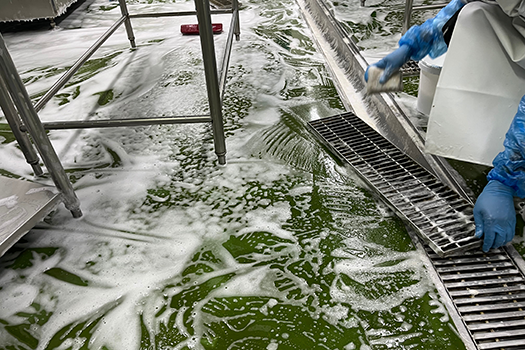
Sanitation compliance depends on people. High turnover, limited training, and unrealistic time windows make consistent execution unlikely.
Operational example: A new sanitation team is given a quick walkthrough and handed a long task list for a short overnight window. Chemical concentrations are estimated rather than measured, and contact time is cut short.
Warning signs: Undocumented or outdated training, chemical dilution errors, crews rushed to finish before startup, and no competency checks.
When traffic flow, tools, and personnel move freely between high-risk and low-risk zones, cross-contamination becomes likely.
Operational example: Raw meat is processed near ready-to-eat products without adequate physical barriers or separate equipment. This increases the risk of cross-contamination when bacteria from raw ingredients spread to finished products through shared surfaces, tools, or employee movement.
Warning signs: Shared tools between zones, inconsistent handwashing and footwear controls, and drains or water flowing from raw areas toward finished-product areas.
Procedures written years ago may no longer match current equipment, products, or hazards.
Operational example: A food plant relies on outdated sanitation procedures that don’t reflect changes in equipment, production processes, or identified food safety hazards. As a result, critical cleaning steps may be missed, increasing the risk of contamination and food safety failures.
Warning signs: Sanitation standard operating procedures (SSOPs) that haven’t been reviewed after line changes, new products added without a hazard reassessment, and corrective actions that fix symptoms rather than root causes.
Related Case Study: Sanitation System Overhaul for A New Production Plant
Watch for these plant-level indicators of weakening food safety management:
Two or three of these appearing together is a strong cue to run a focused sanitation review before the problem reaches finished product.
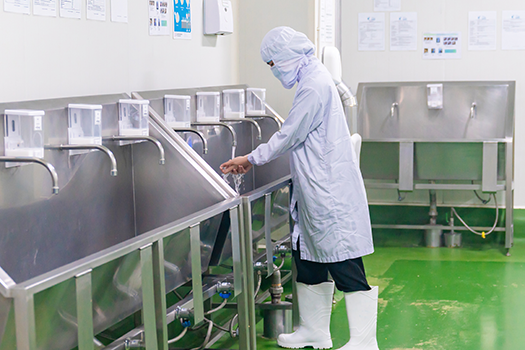
Strong sanitation compliance comes from treating sanitation as a managed, measurable system rather than a nightly task. Leaders can start here:
Sanitation program gaps are early warnings, not isolated housekeeping issues. Weak verification, thin environmental monitoring, loose allergen controls, hard-to-clean equipment, and stretched crews all raise product recall risk. Leaders who treat sanitation as a measured, resourced, and reviewed system can catch hygiene program deficiencies before they become contamination events.
Insufficient verification is among the most common. Plants that clean but do not confirm effectiveness often miss residue, biofilm, or allergen carryover until a failure occurs.
Sanitation controls the pathways through which pathogens, allergens, and foreign material reach product. Each gap widens one of those pathways, which raises the likelihood that a contaminated product ships.
Sanitation compliance means meeting regulatory and customer requirements for cleaning and hygiene. Food safety management is the broader system, including hazard analysis, preventive controls, monitoring, verification, and corrective action, of which sanitation is one core element.
Review it on a regular schedule, at least annually, and whenever equipment, products, processes, or facilities change, or when monitoring data trends the wrong way.
Contain any risk to product, document the finding, identify the root cause, implement and verify corrective action, and update procedures and training so the gap doesn’t return.