Articles & Perspectives
What Are the Warning Signs of a Breaking Food Safety Program?
5 minute read

7 minute read
Why do food manufacturers struggle to standardize food safety across plants? Food safety standardization can be a struggle for manufacturers due to multi-site inconsistencies, manual recordkeeping, overlapping regulatory requirements, high employee turnover, supplier variability, and challenges adopting new technology.
Addressing these issues requires more than creating SOPs. Food manufacturers need clear governance, centralized documentation, consistent training, reliable supplier controls, and systems that give teams greater visibility across facilities.
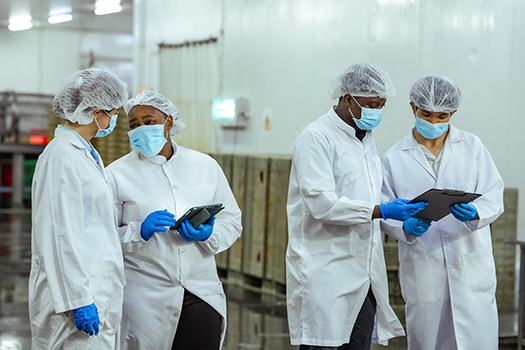
Food safety standardization is the process of establishing consistent procedures, controls, documentation, and training so food safety expectations are the same across shifts, production lines, and facilities.
It’s unrealistic to expect every plant to operate identically. Equipment layouts, products, and processes may be different depending on the plant. The goal is to establish common standards for how risks are identified, controlled, documented, and verified across facilities.
For multi-site food manufacturers, maintaining that consistency can be difficult. Below are six of the most common food safety standardization challenges and ways organizations can address them.
“Effective standardization doesn’t mean forcing every plant to operate the same. It means defining the controls, documentation, training, and outcomes that must be consistent, then giving each facility a way to meet those expectations.” – Geoff Olsen, Supply Chain Practice Director at Catena Solutions
The challenge: Food safety processes can become less of a focus as organizations grow. One facility may be following an updated allergen-control procedure while another is still using an older version.
That inconsistency can make it harder to manage risk, prepare for audits, train employees, and understand whether food safety requirements are being executed the same way across the organization.
Why it happens: SOPs and other critical documents may be managed locally in binders, shared drives, spreadsheets, or individual inboxes rather than through a centralized system with clear ownership and version control.
What helps:
Related: The Top 5 Causes of Food Safety Audit Failures
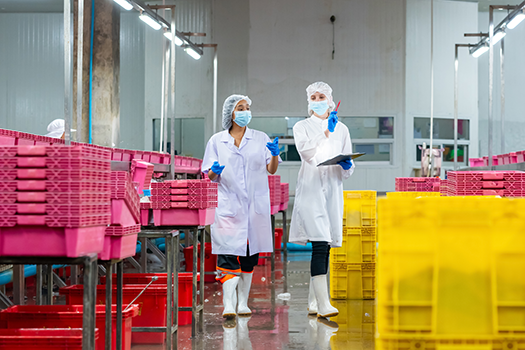
The challenge: Manual records for temperature checks, sanitation, critical control points (CCPs), corrective actions, and other food safety activities can make it more difficult to identify issues quickly and verify that required steps were completed.
Paper and spreadsheet-based records can also increase the amount of time required to collect information during an audit, investigation, or recall.
Why it happens: Manual processes are familiar, inexpensive, and often deeply embedded in plant operations. Replacing them can require technology investment, process redesign, system integration, and employee training.
What helps:
48% of food and beverage suppliers use manual spreadsheets to manage day-to-day tasks, processes, and document exchanges.
The challenge: Food manufacturers may need to comply with multiple regulatory and certification frameworks, including FDA requirements under FSMA, USDA/FSIS requirements, and standards such as SQF, BRCGS, FSSC 22000, or IFS.
Managing these requirements independently can result in duplicate documentation, inconsistent terminology, and unnecessary administrative work.
Why it happens: Different frameworks have their own requirements, documentation expectations, and audit structures. Individual plants may also interpret or manage those requirements differently without enterprise-level governance.
What helps:
The challenge: Even the best food safety procedure is ineffective if employees don’t understand it or follow it consistently.
When experienced employees leave, food manufacturers can also lose valuable institutional knowledge. New employees may be introduced to different practices depending on their trainer, shift, or facility, causing standards to drift over time.
Why it happens: Food safety training is sometimes treated as an onboarding requirement instead of an ongoing process. Attendance or course completion may also be used as proof of competency even when employees haven’t demonstrated that they can perform the required task correctly.
What helps:
Manufacturers face a 44% turnover rate among frontline workers, which results in the loss of critical process knowledge.
Related Case Study: FSQ Systems Optimization for External Manufacturing Partners
The challenge: A manufacturer can have strong internal food safety controls and still face risk from inconsistent supplier practices, ingredients, documentation, or labeling.
A supplier issue can quickly become a plant-level issue if teams lack visibility into incoming materials, allergen information, specifications, certificates, or lot-level traceability.
Why it happens: Supplier approval programs can become overly dependent on document collection rather than ongoing performance monitoring and risk-based verification. Information may also be scattered across email, spreadsheets, ERP systems, and supplier portals.
What helps:
Related: 6 Causes of Sanitation Program Gaps in Food and Beverage Manufacturing

The challenge: Digital food safety platforms, connected sensors, automated monitoring, and traceability technologies can improve visibility and reduce manual work. But implementing new technology across a manufacturing environment can be expensive and complex.
Even when a system is technically implemented successfully, it won’t improve food safety if employees don’t use it correctly or if underlying processes remain inconsistent.
Why it happens: Food manufacturers may be working with legacy equipment, disconnected systems, competing capital priorities, and tight margins. Technology decisions are also frequently made without enough input from the frontline employees who will ultimately use the tools.
What helps:
22% of industrial workers using new technology haven’t received training in the past 12 months.
Food manufacturers can improve food safety standardization by creating an enterprise framework that defines what must be consistent, who owns each standard, how compliance will be measured, and where individual facilities have flexibility.
A strong standardization strategy typically starts with understanding the current state across facilities. That means evaluating SOPs, training, sanitation and food safety practices, documentation, technology, supplier controls, and governance to identify where processes have diverged.
From there, organizations can prioritize the highest-risk gaps and establish a scalable model that can be maintained as the business grows.
Standardization isn’t a one-time documentation exercise. It requires ongoing governance, measurement, training, and accountability to make sure the standards designed at the corporate level are being followed on the plant floor.
“Before trying to standardize everything, manufacturers should identify the processes that create the greatest food safety and operational risk. Prioritizing those areas helps organizations build momentum and demonstrate value without overwhelming the plants responsible for implementation.” – Geoff Olsen, Supply Chain Practice Director at Catena Solutions
Food safety standardization is the practice of applying consistent food safety procedures, controls, documentation, and training across shifts, production lines, and facilities. It helps food manufacturers reduce variability and establish clear expectations for how food safety risks should be managed.
Food safety standardization becomes more difficult across multiple plants because procedures, training, technology, documentation, and local practices can develop independently. Without centralized governance, these differences can lead to inconsistent execution and audit outcomes.
The best starting point depends on the manufacturer’s biggest gaps. For many multi-site organizations, conducting a current-state assessment and centralizing critical documentation can quickly identify inconsistencies. Digitizing high-risk manual processes can then improve visibility and reduce administrative work.
No. Plants may have different equipment, layouts, products, and operational requirements. Standardization means establishing consistent food safety expectations, controls, documentation, and accountability while allowing for justified site-level differences.
Training helps ensure employees understand not only what procedure to follow but how and why it should be performed. Ongoing training, competency verification, and standardized work instructions can help prevent food safety practices from varying by employee, shift, or facility.
Technology can centralize documentation, automate data collection, improve traceability, provide real-time visibility, and support consistent monitoring across facilities. However, manufacturers should first establish consistent processes and requirements so they don’t simply digitize existing inconsistencies.