Articles & Perspectives
What Is Asset Reliability Consulting for Food Plants?
5 minute read

5 minute read
The five most common causes of food safety audit failures are incomplete documentation, cross-contamination risks, inadequate employee training, temperature monitoring failures, and pest control or facility maintenance issues. Addressing these areas proactively can significantly improve audit readiness and reduce the risk of costly nonconformances.
48 million Americans (1 in 6) get sick from foodborne illnesses each year, causing about 128,000 hospitalizations and 3,000 deaths.
| Common Cause of Failure | Typical Audit Finding |
|---|---|
| Documentation | Missing monitoring records |
| Cross-contamination | Allergen or raw/RTE separation failures |
| Training | Employees unable to understand/explain procedures |
| Temperature | Missing calibration or monitoring records |
| Pest control | Structural or sanitation deficiencies |

A food safety audit evaluates whether a facility follows documented food safety programs, regulatory requirements, and certification standards designed to protect consumers and ensure product quality. A food safety audit fails when an inspector identifies nonconformances against a standard such as SQF, BRCGS, FSSC 22000, or FDA/USDA requirements. The five causes outlined below help facilities prepare more effectively and pass audits on the first attempt.
“Food safety audit failures rarely stem from a single incident. They usually result from small, recurring gaps in recordkeeping, training, or preventative maintenance that compound over time.” – Geoff Olsen, Supply Chain Practice Director at Catena Solutions
Documentation provides the evidence that food safety programs are being followed consistently. Even when procedures are performed correctly, missing, incomplete, or outdated records can result in nonconformances because auditors cannot verify compliance.
Typical documentation failures include:
How to prevent documentation problems: Build a document control system with scheduled reviews, and train staff to complete records in real time rather than reconstructing them later.
Cross-contamination remains one of the most critical food safety risks because it can lead to allergen exposure, pathogen transfer, and product recalls. During an audit, inspectors look for evidence that facilities have effective controls in place to prevent contamination between products, ingredients, and production areas.
Frequent findings include:
How to prevent cross-contamination problems: Map cross-contamination risk points in your facility, validate cleaning procedures with allergen swab testing, and enforce zoning with color-coded tools and clear signage.
Undeclared allergens were the leading cause of U.S. recalls (43%) in 2025, overtaking microbial contamination.

Employees are the front line of every food safety program, which is why auditors routinely assess both documented training records and real-world employee knowledge. Gaps in training or hygiene practices often indicate broader weaknesses in a facility’s food safety culture.
Common gaps:
How to prevent training problems: Track training completion in a centralized system, use competency checks (not just attendance signoffs), and reinforce hygiene rules through visible signage and routine supervisor observation.
The FDA identifies significant food safety violations at 1-2% of domestic facilities inspected annually.
Temperature control is essential for preventing pathogen growth and maintaining product safety throughout production and storage. Auditors closely examine monitoring records, equipment calibration, and corrective actions to ensure critical limits are consistently maintained.
Common issues:
How to prevent temperature problems: Calibrate temperature monitoring equipment on a documented schedule and use automated logging where possible to eliminate manual recording gaps.
A facility’s physical condition is often one of the first things an auditor notices. Structural deficiencies, deferred maintenance, and signs of pest activity can quickly raise concerns about sanitation practices and the effectiveness of preventative maintenance programs.
Common findings:
How to prevent pest control problems: Conduct internal facility walkthroughs monthly, keep pest control logs reconciled with vendor visit reports, and address maintenance requests before they become audit findings.
Related: Why Do Asset Reliability Programs Fail in Food Plants?
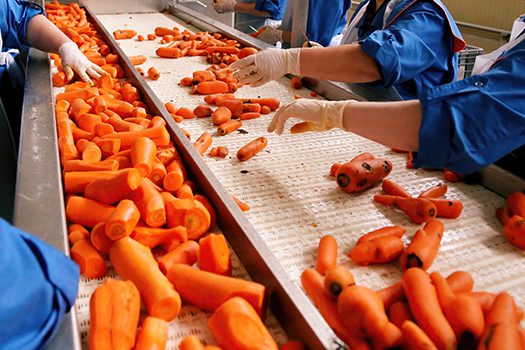
Catena Solutions works with food and beverage manufacturers to address these five root causes before they surface during an audit. Rather than treating audit prep as a last-minute checklist exercise, our approach centers on building sustainable systems that help teams move from reactive corrective actions to a proactive food safety culture.
Case study: FSQ Systems Optimization for External Manufacturing Partners
The five causes of food safety audit failures (documentation gaps, cross-contamination risks, training shortfalls, temperature monitoring failures, and pest/facility maintenance issues) are all preventable with consistent internal auditing, real-time recordkeeping, and ongoing staff training. Facilities that treat these five areas as continuous priorities, rather than pre-audit checklist items, see significantly higher first-pass audit success rates.
Documentation issues are consistently the most cited nonconformance across food safety audits.
Yes. A single critical nonconformance, such as a serious cross-contamination risk or a pest infestation, can result in an automatic audit failure regardless of overall performance.
Failing a food safety audit typically requires the facility to address identified nonconformances through documented corrective actions before certification can be achieved or maintained. Depending on the severity of the findings, organizations may need to undergo a follow-up audit, risk suspension or loss of certification, or face regulatory enforcement if the audit identifies violations of FDA or USDA requirements.
Most certification standards recommend internal audits at least annually, with additional mock audits or self-inspections quarterly or monthly for high-risk facilities.
Yes. High turnover often leads to training gaps, which is why auditors specifically check documented training records and ask floor-level questions to verify real understanding, not just sign-off sheets.
The best way to prepare for a food safety audit is to maintain audit readiness year-round rather than relying on last-minute preparation. Manufacturers should conduct regular internal audits, keep documentation accurate and up to date, train employees on food safety procedures, verify critical control points such as temperature monitoring and sanitation, and promptly address maintenance and pest control issues.